Most of the decks going up around Elk Grove Village right now are replacements. The village was largely built out in the 1960s, ranch and split-level homes on quarter-acre lots, and a lot of those original decks are thirty, forty years past their build date. Some were never permitted in the first place. If you're standing in your backyard trying to figure out who to hire, the quality of the builder matters more than the price on the quote, because a bad deck doesn't fail in year one. It fails in year eight, usually at the ledger board, usually after you've already forgotten who built it.
Ask about footings before you ask about lumber
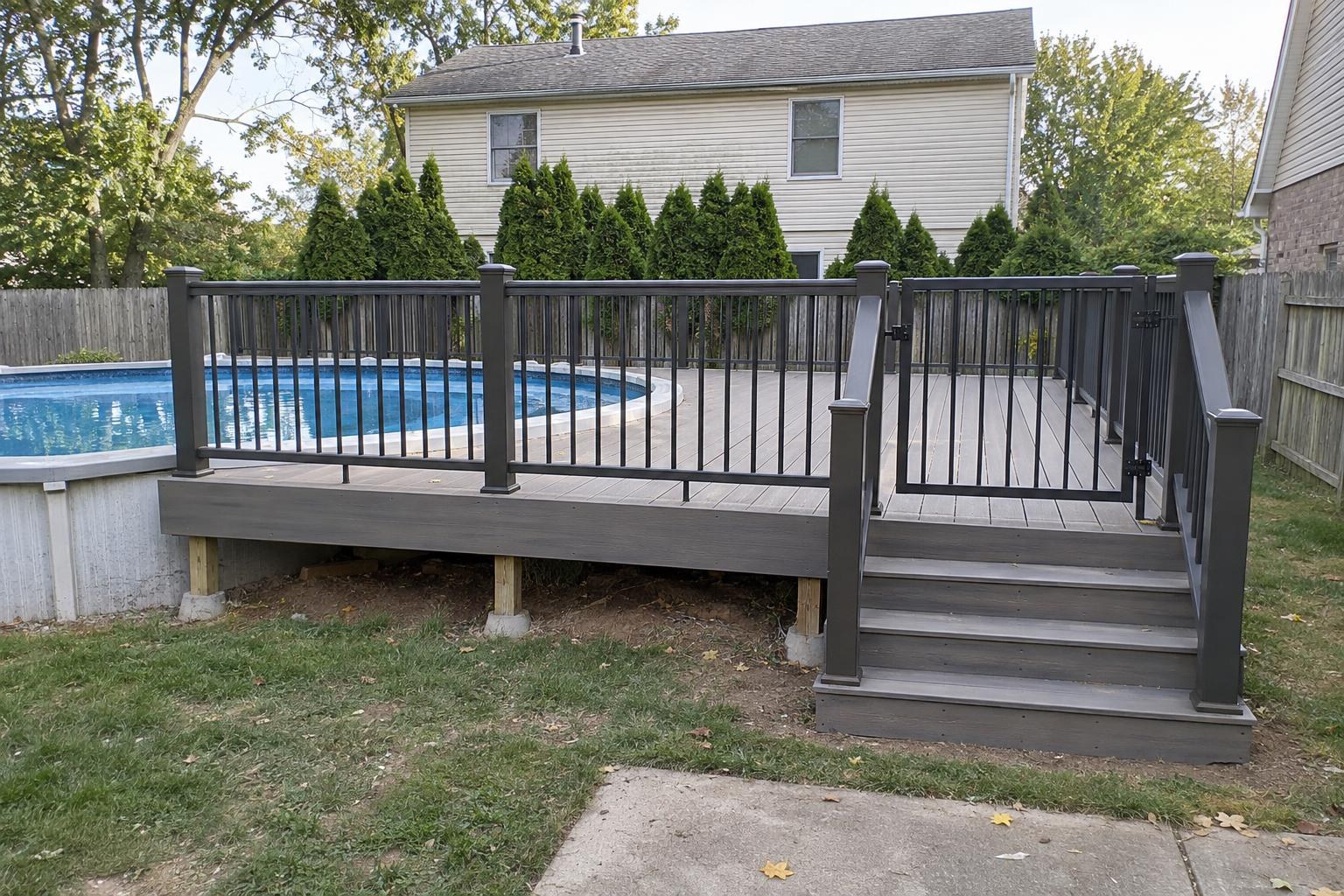
Everybody wants to talk about composite versus cedar. The part that actually determines whether your deck stays level is underground. Cook County soil is heavy clay in most of this area, and clay holds water and swells when it's wet, then shrinks and cracks when it dries out. Combine that with our winters, roughly 30 to 40 freeze-thaw cycles between November and March, and a footing that isn't deep enough will heave. Northern Illinois frost depth is generally figured at 42 inches, and any post footing on an attached deck needs to go below that line or you'll watch your deck slowly separate from the house over a few winters. Ask the builder straight out: how deep are the footings, and are they using sonotube forms poured to grade or just dropping a precast block on the surface? If they hesitate on that answer, that's your red flag, not the brand of decking they're selling you.
The ledger board is where most failures start
An attached deck is only as good as the connection to your house, and that connection is a single board, the ledger, bolted through your rim joist. It needs proper flashing behind it so water running off the deck boards doesn't wick into your house framing. On older Elk Grove homes, especially anything built before the 2000s, you'll sometimes find decks that were nailed on with no flashing at all, because that's just how it was done at the time. A builder worth hiring will pull the old ledger off during a replacement, look at the rim joist underneath for rot, and reflash it properly with step flashing or a manufactured ledger flashing kit, not just caulk. If a contractor tells you they can leave the existing ledger in place to save time on a full deck replacement, ask why, because that's usually a shortcut, not a savings.
Permits aren't optional, and the village will catch it either way
The Village of Elk Grove Village requires a building permit for deck construction, and for anything attached to the house or built more than roughly 30 inches off grade, inspections are part of that process: typically a footing inspection before you pour, a framing inspection before the decking goes down, and a final once railings and stairs are in. A builder who tells you permits are a waste of time and money, or that they can "keep it under the radar," is telling you they don't want an inspector looking at their footings. That should worry you more than the permit fee ever would. Unpermitted decks also show up during home sales, when a buyer's inspector or the title company asks for permit history and there isn't any. Some subdivisions here also have HOA review on top of the village permit, particularly newer developments, so it's worth asking early whether your property has one, rather than finding out after materials are already ordered.
What a real quote looks like
A legitimate deck builder will come out, measure your lot, and talk about grading and drainage, not just square footage. Water needs somewhere to go. If your yard slopes toward the house, or the deck is going to sit over a low spot that already ponds after a heavy July storm, that affects post placement and whether you need gravel backfill around the footings. A written estimate should break out materials and labor separately, specify the lumber species or composite brand by name, not just "premium decking," and state the fastener type, because hidden composite clips cost more than face-screwing and that difference should show up on paper. Walk away from anyone who won't put a start and finish date in writing, who asks for more than a third down before work starts, or who can't tell you who's pulling the permit. If they say you don't need one, that's the end of the conversation for me.
Lumber choices matter less than people think, timing matters more
Pressure-treated pine is still the standard structural frame material even under composite decking, and it's fine for that job. Composite boards have come a long way and most manufacturers now offer 25 to 30 year warranties against rot and fading, which matters here given how much UV and humidity a Chicago-area summer throws at a deck surface. Cedar looks better for about five years and then needs restaining every two to three years to hold its color, which is a real cost most homeowners don't budget for. None of that matters if the crew pours footings in frozen ground, or rushes a summer build during a stretch of 90-degree days without letting treated lumber acclimate before fastening, which is how you end up with boards that cup and pull nails within a season. A good crew paces the work around the weather instead of around their schedule.
If you're getting quotes right now, get at least two, and make the questions above part of every conversation. The contractor who answers footing depth and ledger flashing without blinking is the one who's actually done this work in this soil, in this climate, more than once. That's the kind of builder we try to be at Cedarcrest Deck Builders, and it's worth demanding that standard no matter who ends up with the job.